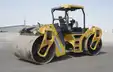
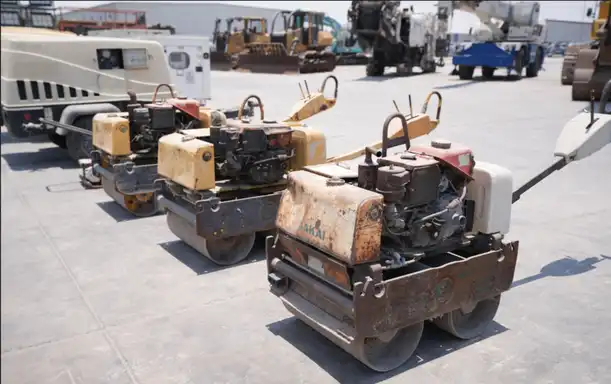
Large road rollers built for bigger paving and compaction jobs
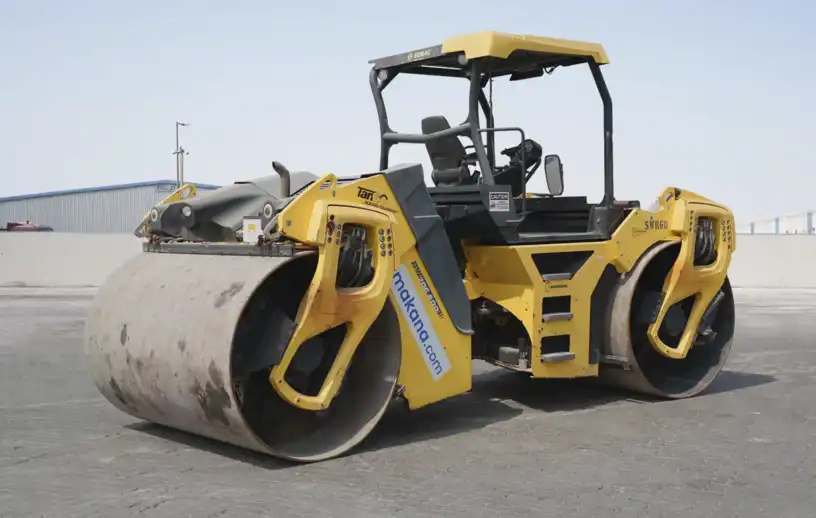
Table of contents
- 12 m vs 1 m road rollers: how much time can you save?
- 2Hamm HD+ 140 VV: wide drums for continuous asphalt paving
- 3Hamm HD 140 vs Bomag BW 206: which suits your paving work?
- 4Asphalt thickness, vibration and the right rolling pattern
- 5Tandem rollers vs single-drum rollers for road construction
- 6Find large road rollers for sale in the UAE on Makana
- 7FAQs about large road rollers
- 7.1Is a 13-ton road roller better than an 8-ton roller for asphalt?
- 7.2Does a wider drum reduce the number of compaction passes?
- 7.3Can a heavy tandem roller damage a thin asphalt layer?
- 7.4What is the difference between a tandem roller and a single-drum roller?
- 7.5What should buyers inspect on a used large road roller?
- 7.6Where can I buy used Hamm and Bomag road rollers in the UAE?
Imagine a contractor resurfacing a 6 m-wide road. A small roller must travel along several narrow strips to cover the asphalt. A larger roller with 2 m drums can cover much more ground in each run.
But does that mean the larger machine finishes the job faster? Not always. It still needs the right number of passes, vibration settings, and asphalt temperature to achieve the required density.
For large paving projects in the UAE, 12–14 ton road rollers can offer a real productivity advantage over compact machines. Models such as the Hamm HD+ 140 and Bomag BW 206 show where that advantage comes from, and why choosing the heaviest roller is not always the best decision.
2 m vs 1 m road rollers: how much time can you save?

A wider drum reduces the number of parallel tracks needed to cover a road. Let's take a 100 m-long section of road, 6 m wide. The contractor is choosing between a compact roller with 1 m drums and a larger tandem roller with drums around 2 m wide.
Allowing approximately 10 cm of overlap between adjacent tracks, the estimated coverage looks like this:
| 1 m roller | 2 m roller | |
| Road width | 6 m | 6 m |
| Drum width | 1 m | 2 m |
| Tracks needed across the road | 7 | 4 |
| If each track needs 4 passes | 28 traverses | 16 traverses |
This is a simplified example using nominal drum widths and the same assumed number of passes. Actual coverage depends on the machine's full drum width, overlap, and approved rolling pattern.
The larger roller needs 12 fewer lengthwise traverses in this example to complete the same assumed rolling pattern. On a long industrial road or highway section, that difference can reduce machine travel and help the roller keep up with the asphalt paver.
However, a wider drum does not automatically reduce the number of passes needed to achieve the required density. If the larger roller requires additional passes because of the asphalt mix or its vibration settings, part of the time advantage disappears.
Hamm HD+ 140 VV: wide drums for continuous asphalt paving

A large roller becomes more useful when the asphalt paver is laying material continuously and the compaction crew needs to keep up.
The Hamm HD 140 technical specifications show a machine weighing approximately 13 ton, with drums around 2 m wide. Its drum width is useful for covering broad asphalt sections, but another feature can make a difference during long shifts: the water system.
The Hamm HD+ 140 has a tank holding approximately 1,100 L of water. Why does that matter?
Fresh asphalt can stick to dry steel drums. The sprinkler system keeps them wet, helping prevent material from being pulled from the new surface.
Imagine a paving crew working through a long road section. If the roller must repeatedly leave the work area for water, the operator loses time and may struggle to maintain the planned rolling pattern.
A larger tank can reduce refill interruptions, although actual working time depends on spray consumption and operating conditions.
The Hamm also has swivel operator controls that help the operator maintain visibility when travelling in either direction.
Hamm HD 140 vs Bomag BW 206: which suits your paving work?

The Hamm HD+ 140 and Bomag BW 206 are close competitors in the heavy tandem roller category. Both weigh roughly 13–14 ton and have drums around 2 m wide.
That means neither has a major advantage in simple road coverage. They can work across approximately the same width during each pass.
The more useful differences appear when considering the asphalt mix, rolling settings, and machine condition.
More vibration force doesn't always mean better asphalt
The Hamm has a higher listed maximum vibration force than the Bomag. But that figure alone cannot tell you which machine will achieve the required asphalt density in fewer passes.
Vibration works through a moving drum. Its effect depends on how strongly the drum moves, how frequently it vibrates, how fast the roller travels, and how the asphalt responds.
For example, a stiff asphalt layer may need greater compaction effort. A thinner or more easily compacted layer may respond better to gentler settings.
Applying unnecessary force can cause material movement, roller marks, or surface damage.
The National Asphalt Pavement Association's guidance on vibratory rollers explains why amplitude, frequency, roller speed, and asphalt thickness must be considered together.
So instead of choosing the Hamm because its maximum vibration force is higher, a contractor should ask whether the roller can achieve the required density using suitable settings and an efficient number of passes.
Asphalt thickness, vibration and the right rolling pattern
A large tandem roller can produce good results on different asphalt layers, but it should not use the same settings for every job. Consider two road projects.
A thin asphalt overlay
A contractor is laying a new asphalt surface approximately 30 mm thick. This thin layer has limited depth for the drum's vibration to act through. Using aggressive vibration can increase the risk of damaging the surface or disturbing the underlying layer.
The operator may need low-amplitude vibration or static rolling, depending on the mix and project requirements.
A thicker asphalt layer
Another contractor is placing a 100 mm asphalt layer during major road construction. The thicker material may need greater compaction effort to achieve the required density throughout the layer.
Here, stronger vibration may be useful, provided the mix remains stable and the selected settings are appropriate. But the operator still needs to check the results. The machine's maximum setting is not automatically the correct one.
Asphalt temperature can matter more than roller size
Imagine a paver advancing while the roller is still completing its previous passes.
If the asphalt cools too much before the required compaction is achieved, a heavier roller cannot necessarily recover the lost opportunity.
The rolling operation normally includes three stages:
- Breakdown rolling: Achieve much of the required density while the asphalt is hot enough for effective compaction.
- Intermediate rolling: Continue compacting until the specified density is reached.
- Finish rolling: Remove surface marks and improve smoothness, normally using static rolling.
The Asphalt Paving Handbook's compaction guidance explains how these stages depend on the mix, temperature, rolling pattern, and paver speed.
For larger UAE paving jobs, this means the contractor must match roller capacity to the paver's output.
If one heavy roller cannot complete the required passes before the mix cools, adding another suitable roller may be more effective than increasing vibration or driving faster.
Tandem rollers vs single-drum rollers for road construction

A contractor preparing a new road may need to compact the ground before the asphalt is even delivered. That work usually calls for a different type of roller.
Suppose a road project includes a compacted soil foundation, a granular roadbase, and an asphalt surface.
- A single-drum vibratory roller is commonly used for compacting the soil and granular layers. Its drum concentrates compaction effort on materials that need to reach the specified density before paving begins.
- A tandem roller, with smooth steel drums at the front and rear, is commonly used for compacting the asphalt after the paver lays it.
The difference is not simply the number of drums. It is how each machine delivers compaction to the material beneath it.
For example, purchasing a heavy Hamm tandem roller does not remove the need for a suitable soil compactor during road-base construction.
For contractors handling complete road projects, the equipment must cover both stages. A tandem roller that produces excellent asphalt finishes may be poorly matched to deep soil-compaction work.
Find large road rollers for sale in the UAE on Makana

Makana offers used tandem rollers and double-drum rollers for sale, including models from Hamm, Bomag, Dynapac, Ammann, and other manufacturers, depending on inventory.
Buyers interested in larger machines can compare models such as the Hamm HD+ 140, Bomag BW 206, and Bomag BW 190 through their technical specifications.
Makana also lists tandem rollers in its machinery auctions, with machine condition and auction format shown for each available lot.
Depending on the listing, buyers can review inspection reports covering more than 75 points, working hours, photographs, operational videos, and information about the vibration, drum, and hydraulic systems.
For contractors, the best roller is not necessarily the heaviest or the one with the highest advertised compaction force. It is the machine that can meet the project's density requirements, maintain the planned rolling pattern, and operate reliably throughout the paving job.
FAQs about large road rollers
Is a 13-ton road roller better than an 8-ton roller for asphalt?
Not always. A 13-ton roller can offer wider drums and greater compaction effort for larger projects. An 8-ton roller may be more suitable for smaller areas or asphalt layers that require gentler compaction.
Does a wider drum reduce the number of compaction passes?
A wider drum reduces the number of parallel tracks needed to cover a road. However, the number of passes required to achieve density still depends on the asphalt mix, roller settings, and project specifications.
Can a heavy tandem roller damage a thin asphalt layer?
Yes. Excessive vibration or unsuitable roller settings can disturb the asphalt or damage the surface. Thin layers may require lower-amplitude vibration or static rolling.
What is the difference between a tandem roller and a single-drum roller?
Tandem rollers commonly compact asphalt using two smooth drums. Single-drum vibratory rollers are commonly used for soil and granular road-base compaction.
What should buyers inspect on a used large road roller?
Check the vibration system, drum surfaces, water spray equipment, steering, articulation, hydraulics, engine, and recorded working hours. Operational testing and inspection reports are especially important.
Where can I buy used Hamm and Bomag road rollers in the UAE?
Makana offers used Hamm, Bomag, and other road rollers through its Dubai equipment marketplace and machinery auctions, depending on availability.