Cold planers: why asphalt resurfacing starts with milling
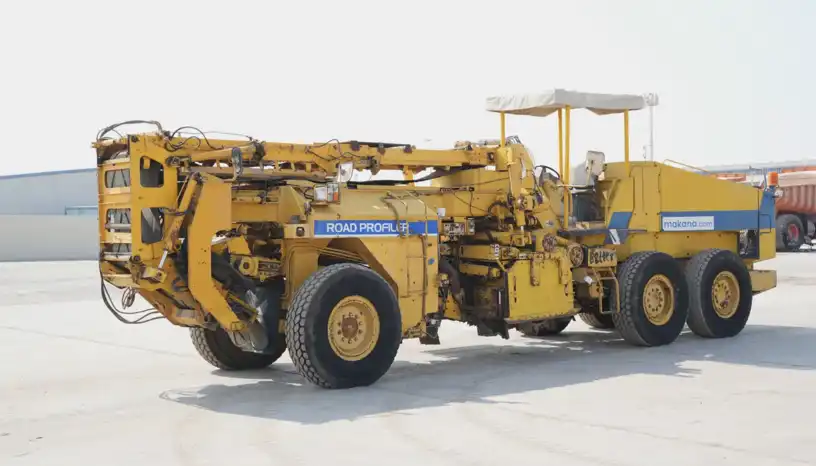
Table of contents
- 1Asphalt milling machines remove damage without rebuilding the entire road
- 2Road milling depth and width: what one pass actually removes
- 3From cold milling to fresh asphalt: what happens next
- 4Komatsu GC380F cold planer: 2 m milling width for road resurfacing
- 5Find asphalt milling machines and cold planers on Makana
- 6FAQs about asphalt milling machines and cold planers
A road contractor needs to replace 50 mm of worn asphalt. Why not simply lay another 50 mm on top?
Because the new layer would raise the road surface, potentially affecting kerbs, drainage inlets, and manhole covers. It could also leave damaged asphalt underneath.
Asphalt milling machines, also called cold planers or road profilers, solve this problem by removing a controlled layer of old pavement before resurfacing begins.
But milling the wrong depth can remove more asphalt than necessary or leave damaged material behind. For contractors handling road maintenance, the important decisions are how deep to cut, how much road to cover, and what equipment can complete the work.
Asphalt milling machines remove damage without rebuilding the entire road
Imagine a road with wheel ruts, surface cracks, and uneven levels. The lower pavement layers are still in good condition, but the upper asphalt needs replacement.
Instead of breaking up the entire road, a cold planer can remove the damaged surface to a specified depth. This is useful for several road problems:
- Wheel ruts: Remove the deformed surface before installing a new asphalt layer.
- Uneven road levels: Correct high spots and restore the planned road profile.
- Worn asphalt: Remove deteriorated upper layers while keeping sound pavement underneath.
- Drainage problems: Adjust surface levels and crossfall so water can flow toward drainage points.
For example, milling 50 mm from a road and replacing it with a suitable 50 mm asphalt layer can help maintain the original road elevation.
But milling is not the solution to every type of road damage. If the base or subgrade has failed, removing only the upper asphalt will not solve the underlying problem. Those areas need deeper repairs before resurfacing.
This is an important distinction in the Asphalt Institute's pavement preparation guidance: the depth of removal depends on the condition of the existing road, not simply the maximum cutting depth of the machine.
Road milling depth and width: what one pass actually removes

A cold planer's milling width determines how much road it cuts across. Milling depth determines how much material it removes vertically.
Both measurements affect the number of passes, amount of waste material, and time needed to prepare the surface.
Consider a 100 m section of road that is 6 m wide and needs 50 mm of asphalt removed.
| Job measurement | Example |
| Road length | 100 m |
| Road width | 6 m |
| Milling depth | 50 mm |
| Cold planer cutting width | 2 m |
| Asphalt removed | 30 m³ |
A 2 m milling drum would need at least three nominal-width passes to cover the road. In practice, overlaps and edge conditions may require additional cutting.
The same road milled to 100 mm would produce 60 m³ of removed asphalt, twice the volume of the 50 mm cut. This is why milling depth affects more than the cutting operation. It also changes how many tipper truck loads must leave the site and how much replacement material the project may need.
Depth must follow the pavement rehabilitation plan. Removing too little can leave damaged layers in place, while cutting unnecessarily deep increases material removal and hauling costs.
From cold milling to fresh asphalt: what happens next

A cold planer does not finish the road. It prepares the existing surface for the next stages of resurfacing.
During milling, a rotating cutting drum breaks the old asphalt into smaller pieces. A conveyor then transfers the material into a truck travelling alongside or ahead of the machine.
This material is known as reclaimed asphalt pavement (RAP). Depending on its condition and the project specifications, it can be processed and reused in new asphalt mixtures or other approved applications.
Once milling is complete, the road crew must prepare the remaining surface.
- Remove loose material: Sweep and clean the milled road so dust and asphalt particles do not interfere with the next layer.
- Repair remaining defects: Address cracks, failed areas, or other damage that milling alone has not corrected.
- Apply tack coat: Where specified, spray a thin asphalt bonding layer to help the new asphalt adhere to the existing surface.
- Lay fresh asphalt: Use an asphalt paver to place the new layer at the planned thickness and level.
- Compact the surface: Use suitable asphalt rollers to achieve the required density and finish.
Milling and paving must therefore be planned together. The milling crew needs enough trucks to remove material, while the paving team needs a clean and properly prepared surface.
The aim is not simply to remove old asphalt. It is to create the right foundation and road profile for the replacement layer.
Komatsu GC380F cold planer: 2 m milling width for road resurfacing

For a contractor working on long road sections, milling width and material removal can matter more than the machine's advertised top working speed.
Take the Komatsu GC380F cold planer, a Japanese road milling machine represented on Makana.
Its listed 2 m milling width makes it suitable for removing broad strips of asphalt rather than concentrating on small patches around manholes or narrow utility trenches.
Makana's current machine data also lists a maximum milling depth of 150 mm. That gives it the cutting range for different resurfacing requirements, although the actual depth must follow the pavement design and machine operating limits.
Two other features are important for production.
- 140 cutting heads: The cutting drum uses replaceable tools to break the asphalt. Their condition affects cutting performance, surface texture, and the load on the machine. Worn or damaged tools can leave an uneven finish and reduce productivity.
- 7 m conveyor: Removed asphalt must leave the cutting area continuously. The conveyor transfers milled material into a waiting truck, reducing the need for separate loading equipment during normal operations.
Find asphalt milling machines and cold planers on Makana

Makana offers cold planers through its machinery auctions in Dubai, including equipment for asphalt removal, road resurfacing, and pavement profiling.
Its November 2026 auction includes a used Komatsu GC380F manufactured in Japan. Buyers can review available inspection information, working hours, photographs, and operational videos before bidding.
When comparing used road milling machines, start with the project's required cutting width and depth. Then check drum condition, cutting tools, conveyor operation, and whether the machine can work within the available road space.
If a specific milling width, brand, or model is not available, Makana's machinery procurement service can help source equipment for upcoming road maintenance and rehabilitation projects.
FAQs about asphalt milling machines and cold planers
Is milling always necessary before asphalt resurfacing?
No. Some roads can receive a new asphalt overlay without milling if the existing pavement is sound, surface levels allow it, and the rehabilitation design permits it. Milling is useful when damaged layers or excess pavement height must be removed.
How deep can an asphalt milling machine cut?
Cutting depth depends on the machine and pavement requirements. The Komatsu GC380F currently listed on Makana has a specified maximum milling depth of 150 mm, although many resurfacing jobs require shallower cuts.
What happens to asphalt removed by a cold planer?
The removed material is called reclaimed asphalt pavement (RAP). It can be transported for processing and reused in asphalt production or other approved applications, depending on material quality and project requirements.
Can a cold planer repair deep road damage?
A cold planer can remove damaged asphalt layers, but it cannot repair a failed road base or subgrade by itself. Deeper structural problems need appropriate repair or reconstruction.
Where can I find used road milling machines in the UAE?
Makana lists cold planers and other construction equipment through its Dubai machinery marketplace and auctions. Buyers can review available machines or request a specific model through its procurement service.