Used Wheel Loaders for Sale in UAE: What Buyers Should Know
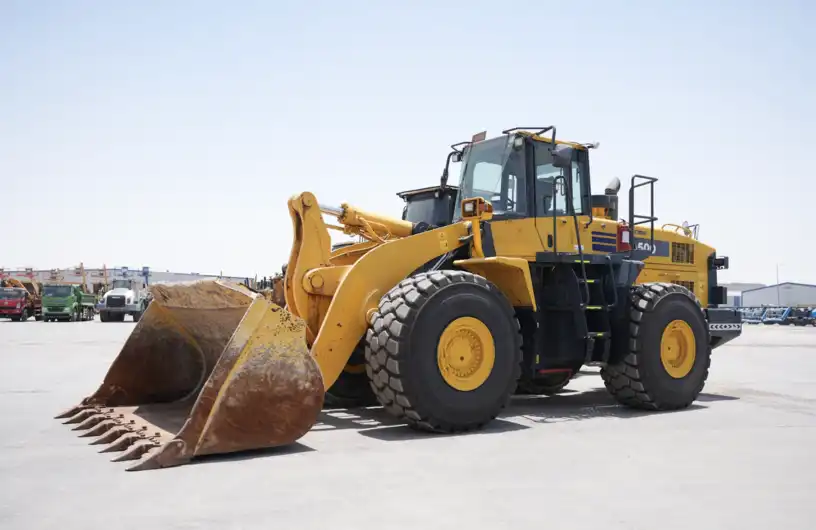
Table of contents
- 1Used wheel loaders for sale in UAE: what capacity really means
- 2Which used wheel loader size is right for your UAE project?
- 3Choosing a used wheel loader for UAE operating conditions
- 4Checklist before buying a used wheel loader in the UAE
- 5How much should you budget for a used wheel loader in the UAE?
- 6Where can you buy used wheel loaders in the UAE?
- 7Find and compare used wheel loaders with Makana
- 8FAQs about buying used wheel loaders in the UAE
- 8.1How many hours is too many for a used wheel loader in the UAE?
- 8.2What is the best used wheel loader for construction work in the UAE?
- 8.3Is a bigger bucket always better for wheel loader productivity?
- 8.4What is the difference between static tipping load and actual carrying capacity?
- 8.5Should I buy a used wheel loader from an auction or through direct sale?
- 8.6Can I buy used wheel loaders through online auctions in Dubai?
- 8.7Are used wheel loaders bought at auction ready to work?
- 8.8What documents do I need to export a used wheel loader from Dubai?
- 8.9How can I estimate the price of a used wheel loader in the UAE?
- 8.10Can I buy a small or compact used wheel loader in the UAE?
Two used wheel loaders can show similar working hours and still differ significantly in price. In the UAE, the difference often comes down to bucket configuration, machine condition, previous operating environments, and maintenance history.
Buying a used wheel loader is not simply about choosing a popular brand or finding the lowest price. The machine must handle the material, fit the jobsite, load the intended trucks, and operate reliably under local conditions.
This guide explains how to choose the right used wheel loader for sale in UAE, compare common models, inspect important components, estimate ownership costs, and decide between direct purchases and machinery auctions.
Used wheel loaders for sale in UAE: what capacity really means
Wheel loader capacity is more than the bucket size advertised in a listing. Several specifications determine how much material a machine can move safely and efficiently.
Bucket capacity and material density
Bucket capacity is measured in cubic metres (m³), but volume alone does not determine productivity.
A 4 m³ bucket filled with dry sand carries a different weight from the same bucket filled with wet soil or crushed aggregate. Dense material can bring a loader close to its operating limits before the bucket is completely full.
Bucket design matters as well:
- General-purpose bucket: Suitable for sand, soil, aggregate, and mixed construction materials.
- Rock bucket: Designed for abrasive materials and demanding quarry applications.
- Light-material bucket: Provides greater volume for relatively light materials.
- High-dump bucket: Offers additional discharge height for specific loading applications.
A larger bucket is not necessarily better. The correct choice depends on material density, machine stability, and the loading cycle.
Operating weight, tipping load and breakout force
Operating weight affects traction, stability, transport requirements, and the load placed on tyres and drivetrain components.
Static tipping load indicates a machine's stability under specified test conditions. It should not be treated as the amount an operator can safely carry during normal work, particularly when turning or operating on uneven ground.
Breakout force describes the force available to penetrate and separate material. It becomes especially important when loading compacted soil, dense aggregate, and difficult stockpiles.
Buyers should also examine the linkage design. Z-bar linkages generally prioritise digging and breakout performance, while tool-carrier configurations can provide advantages for material handling and attachment positioning.
These specifications need to be evaluated together rather than individually.
Dump height and truck compatibility
A loader may have enough bucket capacity but still be unsuitable for the trucks it needs to load.
Dump clearance determines whether the bucket can discharge material over the truck body's sides, while forward reach affects positioning during loading.
Buyers should check:
- Maximum dump clearance at the relevant bucket position.
- Forward reach when discharging material.
- Truck body height and loading access.
- Number of bucket passes required to fill the truck.
- Space available for turning and repositioning.
Too many bucket passes increase cycle time. An oversized loader, meanwhile, may operate below its productive capacity or create overloading risks.
For a practical explanation, see Makana's guide to matching wheel loaders with dump trucks.
Which used wheel loader size is right for your UAE project?
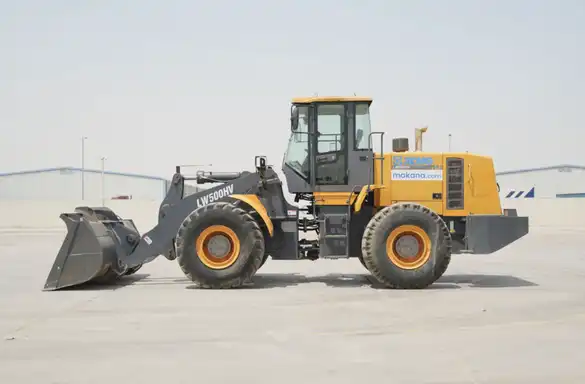
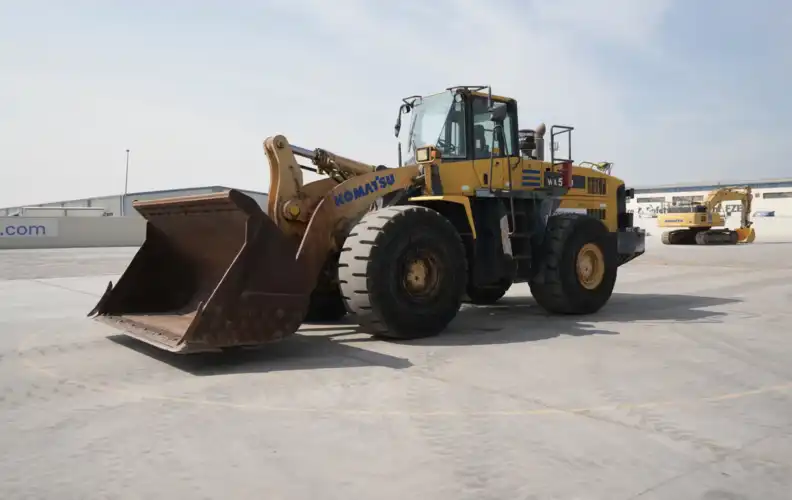
Wheel loaders range from compact machines for restricted sites to heavy production equipment used in quarries and large aggregate yards.
The best size depends on daily production, material type, truck capacity, and available working space.
Small wheel loaders for landscaping and restricted sites
Compact wheel loaders, generally weighing less than 15 tons, are suitable for applications where manoeuvrability matters more than maximum loading output.
Many smaller units fall into the 5–10 ton range, with bucket capacities around 1–2 m³ depending on their configuration.
Common applications include:
- Landscaping and municipal maintenance.
- Small construction sites in Dubai and Abu Dhabi.
- Agricultural operations and storage yards.
- Light material handling and site cleanup.
Their smaller dimensions make them easier to operate around buildings and other equipment. However, they may require more passes when loading large trucks.
Before buying, check turning space, dump height, tyre condition, and whether the machine can maintain the required production rate.
Mid-size wheel loaders for construction and truck loading
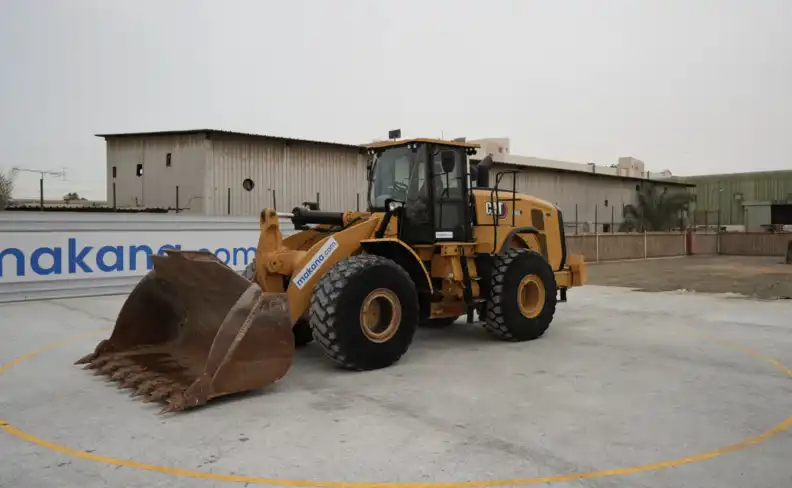
Wheel loaders in the 15–30 ton range are practical for many UAE construction businesses.
They provide a balance between bucket capacity, manoeuvrability, fuel consumption, and loading performance.
Popular examples include the Cat 950, Cat 966, Komatsu WA470, and Volvo L120.
This class is commonly used for:
- Ready-mix concrete and aggregate yards.
- Loading tipper trucks and trailers.
- Sand and gravel stockpile management.
- General construction and road projects.
A Cat 966L and Komatsu WA470-6R may offer similar loading capacity, but buyers should compare their actual bucket configurations, hydraulic response, stability, and operating condition.
Makana's Cat 966 vs Komatsu WA470 comparison examines the differences between these loader families for UAE applications.
Large wheel loaders for quarries and bulk material
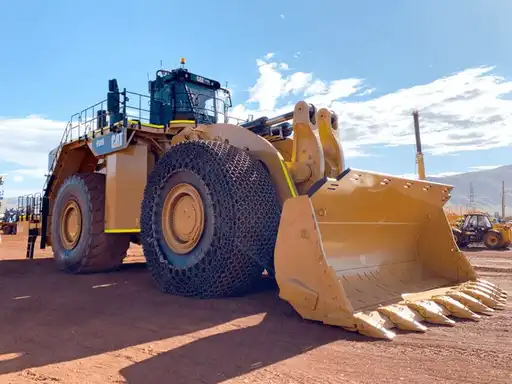
Wheel loaders above 30 tons are generally suited to high-volume material handling, quarry support, crusher plants, and demanding earthmoving operations.
Their larger buckets and stronger loading systems can improve production when trucks arrive consistently and sufficient working space is available.
Common applications include:
- Quarry and crusher operations.
- Bulk aggregate and rock loading.
- Large material stockpiles.
- High-volume truck loading during extended shifts.
However, bigger machines require more space, higher fuel budgets, larger tyres, and more demanding transport arrangements.
A large loader that regularly waits for trucks or material can become more expensive to operate than a smaller machine working consistently.
Used wheel loader models to compare in the UAE
The following models provide useful benchmarks for different loading applications.
| Wheel loader model | Approx. operating weight | Bucket capacity |
|---|---|---|
| Cat 950GC | 17 tons | 3.2 m³ |
| Cat 966L | 23.2 tons | 4.6 m³ |
| Komatsu WA470-6R | 25 tons | 3.6–5.2 m³ |
| Cat 980K | 31.2 tons | 5.4 m³ |
| Volvo L220G | 32.8 tons | 5.9 m³ |
| Komatsu WA500-6 | 39.2 tons | 5.3 m³ |
Figures are based on representative model specifications. Actual bucket capacity and operating weight can vary by configuration and attachments.
Notice that the Komatsu WA500-6 is heavier than the Volvo L220G but has a smaller bucket in these configurations. Operating weight alone does not determine how much material a machine can carry per cycle.
Buyers can explore additional models and technical figures through Makana's wheel loader specifications library.
Choosing a used wheel loader for UAE operating conditions
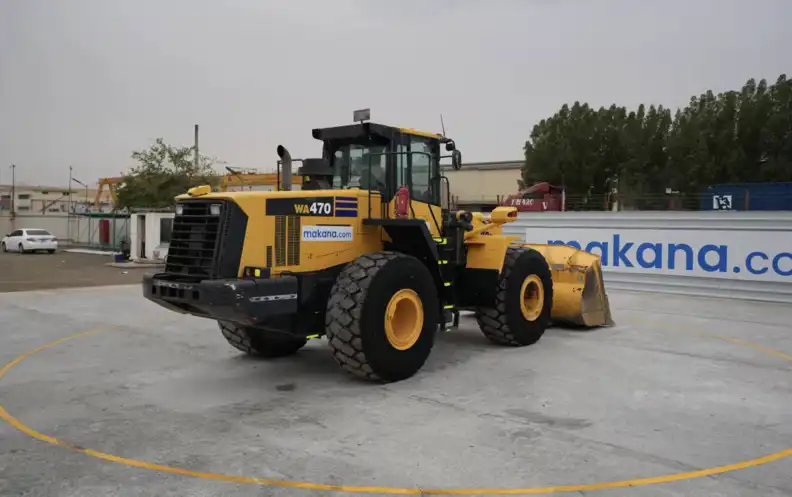
The UAE's high temperatures, dusty environments, abrasive materials, and extended operating shifts make certain machine components especially important.
Two loaders with similar hours may have experienced very different operating conditions.
Cooling systems and engine performance
High ambient temperatures place additional demands on engine cooling, transmission cooling, and hydraulic systems.
Before purchasing a used wheel loader, inspect the radiator, cooling fan, coolant condition, hoses, and signs of previous overheating.
A machine that maintains normal temperatures while idling may still overheat during sustained loading.
Where possible, evaluate its cooling performance after the engine reaches operating temperature and during actual working cycles.
Features such as reversible cooling fans and easily accessible radiator assemblies can also help in dusty aggregate environments.
Air filtration and dust protection
Wheel loaders operating in quarries, sand yards, and construction sites are frequently exposed to airborne dust.
Poor filtration can accelerate engine wear and contribute to cooling problems.
Check air filter condition, intake seals, filter housings, and maintenance records.
Cab sealing matters too. Dust entering the operator compartment may indicate damaged seals or poor maintenance.
Tyres, traction and articulation
Tyres are a significant ownership expense, particularly on large wheel loaders.
Inspect tread depth, sidewall damage, uneven wear, cuts, and repairs. Tyres suited to prepared construction yards may not perform equally well on sharp quarry surfaces.
Articulated steering joints also deserve attention because wear in pins and bushings can affect steering precision and stability.
Uneven tyre wear, unusual steering movement, or visible structural repairs may indicate problems requiring further investigation.
Cab comfort, electronics and visibility
Air conditioning is particularly important during UAE summer operations.
Check cooling performance, blower strength, compressor noise, and cab ventilation.
Also inspect warning indicators, wiring repairs, control response, and electronic faults.
Depending on the model, features such as reversing cameras, payload monitoring, ride control, and proximity warnings can support safer, more efficient operations.
Their value should be considered alongside the machine's condition and intended work.
Checklist before buying a used wheel loader in the UAE

A proper inspection is one of the most important steps in buying a used wheel loader.
A clean exterior does not guarantee healthy hydraulics, a reliable transmission, or a properly maintained engine.
Engine and transmission
Check for unusual engine noise, excessive exhaust smoke, fluid leaks, and starting problems.
Review maintenance records and, where available, diagnostic findings and oil analysis.
Test transmission engagement in forward and reverse. Delayed engagement, unusual vibration, slipping, or irregular gear changes may indicate expensive drivetrain problems.
Hydraulic system and lifting performance
Inspect hydraulic pumps, hoses, cylinders, and connections for damage and leakage.
Raise and lower the boom, tilt the bucket, and assess whether the controls respond consistently.
Check for excessive movement, slow hydraulic response, or unusual noise under load.
Leaks that appear only after the machine becomes hot are especially important to identify.
Boom, bucket and structural components
Inspect the bucket cutting edge, lift arms, attachment points, pins, and bushings.
Look for:
- Cracks around pin bosses and mounting points.
- Excessive movement in bucket or linkage joints.
- Weld repairs around high-stress structural areas.
- Uneven wear suggesting misalignment.
- Damage to the frame or articulation area.
Repairs do not automatically make a loader unsuitable for purchase, but their quality and potential impact should be assessed.
Brakes, steering and electrical systems
Test service brakes and parking brake performance.
Check steering response throughout the articulation range and listen for abnormal noises.
Inspect dashboard warnings, switches, wiring, lights, sensors, and the air-conditioning system.
When possible, conduct an operational test with the machine performing normal loading work.
Working hours and maintenance history
There is no universal number of hours that makes a used wheel loader unsuitable.
A machine with high operating hours and consistent maintenance may represent better value than a low-hour loader that has suffered repeated overheating or neglected servicing.
Review the service history, condition of major components, inspection results, and evidence of previous repairs.
A detailed inspection report should help explain the machine's condition rather than simply assign it a general rating.
Remote photographs, operational videos, and 360° or 3D views can also help buyers identify points requiring further investigation before travelling to inspect the machine.
How much should you budget for a used wheel loader in the UAE?

The purchase price is only part of the total investment.
Two similarly priced wheel loaders can have substantially different operating costs, depending on their condition, fuel consumption, tyres, parts availability, and expected repairs.
Buyers should consider four main cost areas.
1. Purchase price and transaction costs
Compare asking prices for machines with similar model years, operating hours, configurations, and condition.
Include any applicable transaction charges, taxes, customs obligations, or auction fees.
A lower advertised price does not necessarily mean a better purchase.
2. Transport and preparation
Moving a wheel loader may require specialised transport depending on its dimensions and operating weight.
Buyers should also budget for documentation, delivery, basic servicing, attachments, and repairs required before deployment.
3. Fuel, tyres and maintenance
Fuel consumption depends on machine size, working cycles, material density, and operating conditions.
Tyre replacement, lubricants, filters, hydraulic components, and routine servicing can all affect long-term operating costs.
Parts availability and local service support are particularly important for equipment expected to operate daily.
4. Repairs, downtime and resale value
A machine with a lower purchase price may require substantial repairs after delivery.
Engine, transmission, axle, and hydraulic failures can also interrupt production.
Estimate the likely maintenance requirements and consider the machine's expected resale value.
Makana's Used Equipment Value Calculator provides an additional reference when evaluating machinery prices based on model information, usage, condition, and market data.
The objective is to compare total ownership costs and productive output, not just the initial purchase price.
Where can you buy used wheel loaders in the UAE?

Buyers can find used wheel loaders through machinery marketplaces, equipment dealers, and online auctions.
Each route offers different advantages depending on budget, timing, and purchasing requirements.
Heavy equipment marketplaces and direct sales
Online marketplaces allow buyers to compare machines from different brands, models, and operating-weight classes.
Direct sales can be particularly useful when a buyer needs a specific machine quickly or wants time to negotiate purchasing arrangements.
Buyers should prioritise listings with reliable specifications, clear condition information, and sufficient inspection evidence.
A good starting point is Makana's wheel loaders for sale in the UAE, where buyers can review available equipment across different sizes and brands.
Machinery dealers and low-hour equipment
Authorised dealers may be suitable for buyers seeking newer machines, particular configurations, or manufacturer-backed support.
Low-hour equipment can provide an alternative between heavily used machinery and brand-new models.
However, newer machines usually require a higher initial investment.
Buyers should confirm the warranty terms, service arrangements, machine availability, and delivery requirements before committing.
Used wheel loader auctions in Dubai
Online machinery auctions offer another route for contractors, traders, and fleet owners looking to acquire used wheel loaders.
Instead of paying a fixed asking price, buyers compete through bidding.
Auctions can help establish market prices, but the winning bid is not necessarily lower than a direct-sale price.
Used wheel loader auctions can be useful for buyers who want:
- Access to machinery offered through scheduled bidding events.
- Price discovery through competitive bidding.
- Opportunities to compare equipment from different fleets.
- A defined purchasing timeline.
Makana's heavy equipment auctions provide online bidding opportunities for machinery located in Dubai, with available lot information and inspection materials.
How to buy a wheel loader at auction
Before bidding, establish a maximum purchase budget based on the loader's market value and condition.
Review the inspection report, operating hours, photographs, videos, and disclosed defects.
Then calculate the total expected cost, including applicable auction charges, transport, documentation, and repairs.
Also check whether the auction has a reserve price, since a starting bid does not necessarily represent the minimum acceptable selling price.
Buyers participating through Makana should review the steps to join machinery auctions, including account verification, refundable deposits, bidding procedures, payment requirements, and collection arrangements.
The goal is not simply to win the auction. It is to acquire a machine that can perform the required work at a reasonable total cost.
Find and compare used wheel loaders with Makana

Makana combines used equipment listings, technical research, inspections, and purchasing services to help UAE and international buyers evaluate machinery before making a decision.
Compare wheel loader models and technical specifications
Before selecting a particular unit, buyers can use Makana's Machinery Comparison tool to review models side by side.
This is useful when comparing machines with similar operating weights but different engines, bucket capacities, hydraulic systems, or dimensions.
The Best Wheel Loaders ranking also provides model comparisons covering applications, performance characteristics, and machine strengths.
Together, these resources help buyers build a shortlist before considering the condition and price of individual machines.
Review inspected machinery before buying
Makana's used machinery listings can include 75+ point inspection reports covering major components and operating systems.
Depending on the unit, buyers may also find:
- Detailed machine specifications and operating hours.
- High-resolution photographs and 360° views.
- Operational testing videos.
- Inspection findings and disclosed defects.
- Customs status and relevant machine documentation.
This information helps buyers evaluate equipment remotely and prepare questions before arranging an inspection or purchase.
An inspection report is a decision-making tool, not a substitute for reviewing the machine's condition and assessing potential repair costs.
Request a specific wheel loader
Not every buyer will find the exact model, bucket size, operating hours, or configuration needed in current inventory.
Makana's Request a Machine service allows buyers to submit their equipment requirements for sourcing assistance.
Buyers can specify their preferred brand, model, capacity, condition, budget, and delivery requirements.
Makana also supports purchasing arrangements, documentation, and logistics coordination where applicable.
For contractors expanding their fleets, the combination of technical research, inspected listings, direct purchasing, auctions, and machinery sourcing provides several ways to find equipment that matches operational needs.
FAQs about buying used wheel loaders in the UAE
How many hours is too many for a used wheel loader in the UAE?
There is no fixed limit. Working hours should be considered alongside maintenance history, engine condition, cooling performance, hydraulic health, and articulation wear. A well-maintained high-hour machine can be a better purchase than a poorly maintained low-hour loader.
What is the best used wheel loader for construction work in the UAE?
Mid-size machines such as the Cat 950, Cat 966, and Komatsu WA470 are suitable for many construction and material-handling applications. The best choice depends on the material, daily production target, truck size, available space, and machine condition.
Is a bigger bucket always better for wheel loader productivity?
No. A larger bucket can increase loading volume, but it must match material density, stability limits, and truck capacity. Oversized buckets can reduce traction, increase component stress, and create inefficient loading cycles.
What is the difference between static tipping load and actual carrying capacity?
Static tipping load is a stability measurement under defined test conditions. Safe working capacity depends on the machine's configuration, ground conditions, articulation angle, bucket position, and operating requirements. Always follow the manufacturer's applicable operating limits.
Should I buy a used wheel loader from an auction or through direct sale?
Auctions are useful for competitive price discovery and scheduled purchasing opportunities. Direct sales may provide more flexibility for negotiating terms and targeting specific equipment. In either case, evaluate inspection findings and total purchasing costs before committing.
Can I buy used wheel loaders through online auctions in Dubai?
Yes. Online heavy equipment auctions in Dubai can include wheel loaders from different brands and capacity classes. Buyers should review current auction inventory, bidding requirements, inspection information, and applicable fees before participating.
Are used wheel loaders bought at auction ready to work?
Not necessarily. Some machines may be suitable for immediate deployment, while others require maintenance or repairs. Review the inspection report, operational evidence, disclosed defects, and sale conditions before bidding.
What documents do I need to export a used wheel loader from Dubai?
Requirements depend on the destination country, shipping arrangement, and customs status. Buyers generally need the relevant purchase and export documentation, identification or company documents, and applicable customs and transport paperwork. Confirm the exact requirements before purchasing.
How can I estimate the price of a used wheel loader in the UAE?
Compare similar models by year, operating hours, bucket configuration, condition, and maintenance history. Include expected repairs, transport, and transaction costs. Machinery valuation tools, comparable listings, and auction results can provide useful additional price references.
Can I buy a small or compact used wheel loader in the UAE?
Yes. Compact wheel loaders are used for landscaping, small construction sites, agriculture, and restricted material-handling areas. Availability varies, so buyers should check current listings and compare operating weight, bucket capacity, dump height, and working dimensions before purchasing.