How Many Roller Passes Does Soil Need Before It Is Ready for Construction?
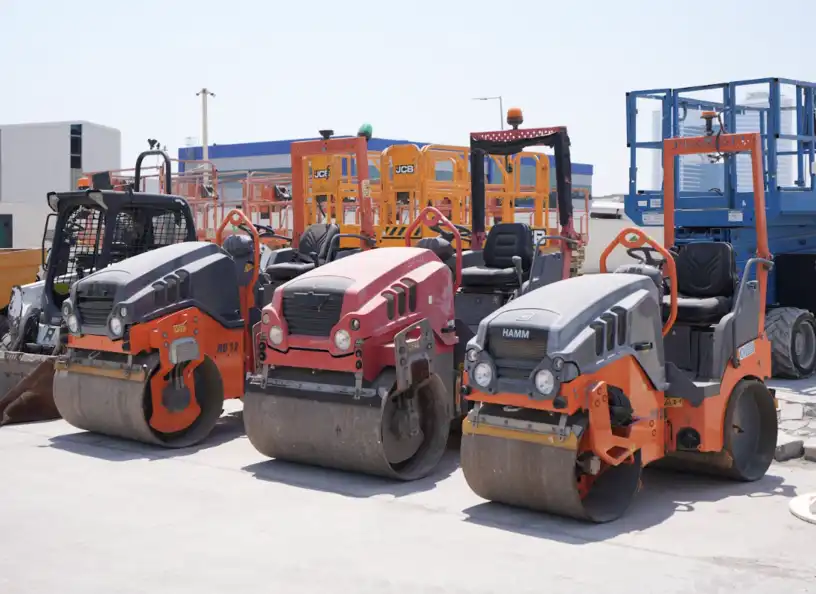
Table of contents
- 1Soil Compaction Roller Passes Have No Fixed Number
- 2Moisture and Soil Layer Thickness Change Roller Passes
- 3Choosing a Soil Compaction Roller for Sand, Gravel and Clay
- 4A Soil Compaction Test Strip Helps Set the Right Pass Count
- 5Field Density Tests Show When Soil Is Ready for Construction
- 6Find Soil Compaction Equipment for Sale in the UAE on Makana
- 7FAQs About Roller Passes and Soil Compaction
A roller can pass over the same stretch of ground several times and still leave weak soil underneath. On another job, fewer passes may be enough. That is why asking for a single number, four, six or eight, rarely gives a useful answer.
For a UAE contractor, the practical question is simpler: is the layer compacted well enough for the next stage, and will another pass improve it? The answer comes from the material, its moisture, the layer thickness and a field check, not the roller counter alone.
Soil Compaction Roller Passes Have No Fixed Number
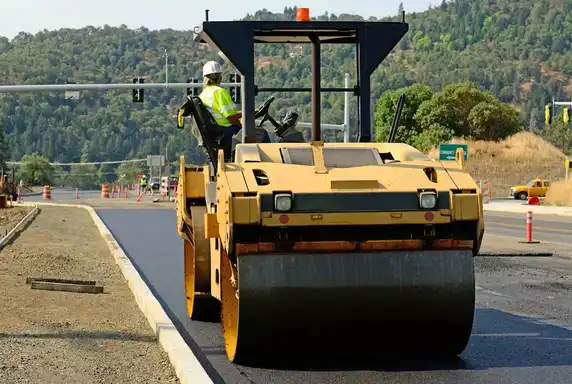
A roller pass is one movement over a given strip of ground. If a roller travels down one lane and then comes back over the same lane, the soil there has received two passes. Covering the rest of a wide site in neighbouring lanes is different: it spreads the work across the site rather than adding passes at one point.
A simple site example: a 6 m-wide access road, a 2.1 m drum and 20 cm of overlap need about four side-by-side lanes to cover the width. That is one full coverage of the road, not four passes over the same spot. The required passes at each point still come from the test strip.
A good rolling pattern delivers enough pressure or vibration to the full soil layer without wasting effort. A dense-looking surface does not guarantee that the material underneath is firm. If the project requires a field density result, the roller is finished only when that requirement is met.
More passes do not automatically mean better compaction. Once the material stops getting denser, repeating the same movement can add cost without fixing the cause of a failed test.
Moisture and Soil Layer Thickness Change Roller Passes

Soil needs the right amount of moisture to compact well. Sand that is very dry may resist packing into a stable layer. Material that is too wet can move, rut or pump beneath the roller. In Dubai’s heat, a prepared layer may lose moisture while the crew is still working. Water must be mixed through the material, not just sprayed over its surface.
Layer thickness matters just as much. A roller can make the top feel firm while the bottom stays loose if the fill is placed too deep in one go. A practical fix is to spread the material in thinner, even layers and compact each one before adding the next.
Consider a contractor preparing a site access road. If the roller keeps leaving ruts, adding two more passes is not the first solution. Check whether the fill is too wet, poorly mixed or too thick. Correcting the layer can achieve more than repeatedly driving over the same problem.
Choosing a Soil Compaction Roller for Sand, Gravel and Clay

The right roller depends on what is under its drum. On open areas of sand or well-graded gravel, a suitable smooth-drum vibratory roller is a common choice. On cohesive soil that needs a kneading action, a padfoot roller can be more effective. Neither should be selected by machine weight alone.
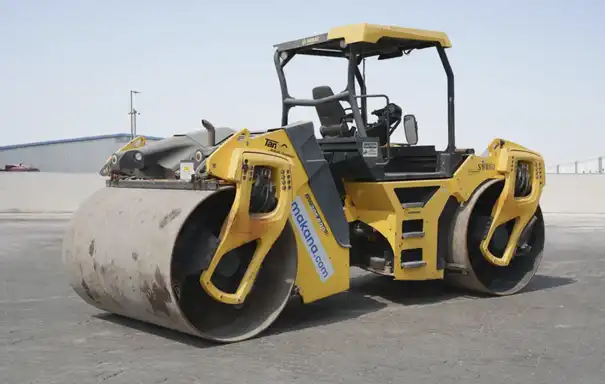
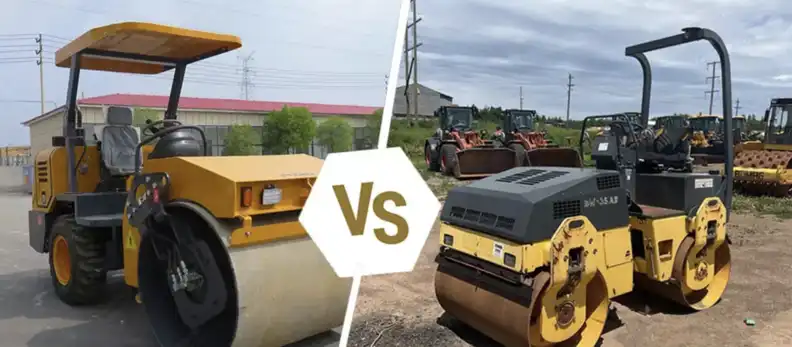
Tandem rollers are especially useful for asphalt and prepared road surfaces, but they are not automatically a replacement for a heavy single-drum roller on deep soil fill. Around utility trenches, kerbs and narrow spaces, smaller compactors may be the practical choice. We cover the broader machine differences in our guide to single-drum and tandem rollers.
The point is not to buy the biggest roller. It is to choose equipment that works with the soil type, the thickness of the layer and the space available on the site.
A Soil Compaction Test Strip Helps Set the Right Pass Count
Set aside a short, representative area of the same fill you will use on the job. Spread it at the approved layer thickness, prepare the moisture, and use the roller planned for the work.
Measure density as required by the project test plan after successive passes. If the result is below the target, first check moisture and layer thickness. Extra rolling will not fix unsuitable material or a badly prepared layer.

In this illustrative example, the project target is 95% of maximum dry density. The invented readings first reach it at six passes (95.6%). Eight passes give about 96.8%, while ten give 97.1%, a much smaller improvement.
That does not make six or eight passes the right answer for every site. The team should choose its pattern from actual test-strip results and the project requirements. A slight drop in one later reading is not enough on its own to prove over-compaction.
Once the trial gives an acceptable pattern, crews can use it on comparable areas and check the finished layers. If the material, moisture or layer thickness changes, test the rolling pattern again.
Field Density Tests Show When Soil Is Ready for Construction
A passing field density test is what allows the next stage to move forward when the contract calls for density-controlled compaction. A laboratory test establishes the reference density for the soil, while a field test checks what the crew achieved on site. The site engineer compares the result with the project requirement before approving the next layer or activity.
There is a useful UAE example. For the land-grading and backfilling works covered by Abu Dhabi’s soil engineering guide, the 2024 requirements specify layers no thicker than 25 cm and at least 95% of maximum dry density, with 98% preferred beneath foundations. These figures belong to that particular scope; the approved specification for the actual project remains the deciding requirement.
For contractors, the message is straightforward: do not move on just because the surface looks smooth or because the roller completed a set number of passes. Confirm the required result, deal with soft spots and then release the area for the next job.
Find Soil Compaction Equipment for Sale in the UAE on Makana

Different work areas call for different machines. Explore compaction equipment for sale in the UAE when comparing equipment for roadwork, site preparation and smaller repair jobs. For narrow working areas, walk-behind rollers and plate compactors may suit the job better than a full-size roller.
If your project needs a particular smooth-drum or padfoot soil roller that is not listed, share the required application and specifications through our machinery procurement service. Choosing the right type of compactor is a better starting point than buying on drum size alone.
FAQs About Roller Passes and Soil Compaction
Can a plate compactor replace a soil roller?
For small areas, trenches and edges, a suitable plate compactor may do the job. Large, deep fill areas usually need different equipment and a compaction method that meets the project specification.
Can a bulldozer compact soil instead of a roller?
A bulldozer can spread fill and its tracks provide some pressure, but that does not automatically satisfy a specified compaction requirement. Use an approved method and verify the achieved density.
Should soil be compacted before a concrete slab is poured?
Where a slab sits on engineered fill, that fill normally needs preparation, compaction and approval before concrete work. Follow the structural design and the project’s inspection requirements.
What happens if the soil compaction test fails?
Check moisture, layer thickness and material condition first. The site team may need to loosen, dry, remix, replace or recompact the fill, then arrange another test before continuing.
Can you compact soil during a hot UAE summer?
Yes, provided site conditions and the approved method allow it. Hot, dry weather can change soil moisture quickly, so crews should check moisture and avoid leaving prepared layers exposed for too long.