Backhoe loader in UAE: 5 jobs one machine can handle
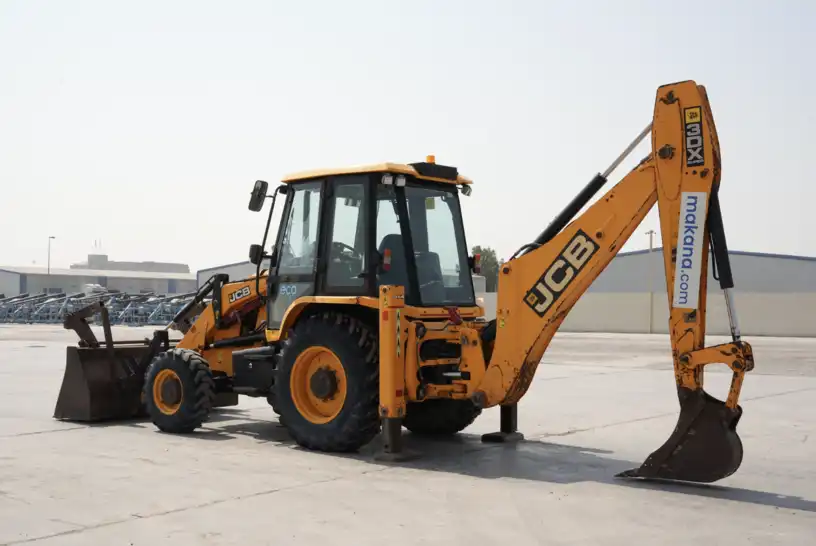
Table of contents
A contractor digging utility trenches in Dubai may also need to load sand, backfill the excavation, clear broken concrete, and move construction materials. Hiring a different machine for every task can increase transport costs and complicate site planning.
A backhoe loader combines a front loading bucket with a rear excavating arm, allowing one machine to handle several jobs. This versatility makes it useful for construction, road maintenance, landscaping, and utility projects across the UAE.
However, not every backhoe loader has the same digging depth, lifting capacity, hydraulic performance, or attachment options. Understanding what the machine can do—and where a dedicated excavator or wheel loader performs better—is essential before buying.
Here are five practical jobs a backhoe loader can cover, followed by the specifications and buying considerations that matter in the UAE market.
Backhoe loaders for mixed construction work in the UAE

A backhoe loader has two main working ends.
The front loader carries a bucket for scooping, lifting, transporting, and spreading material. The rear backhoe uses a boom, dipper, and bucket to excavate trenches, dig foundations, and remove soil.
Most conventional backhoe loaders also have wheeled undercarriages and rear stabilisers. The wheels allow the machine to travel around a construction site, while the stabilisers support it during digging.
This combination is useful on smaller projects where the workload changes throughout the day.
For example, a contractor may spend the morning excavating a drainage trench, use the front bucket to move excavated soil, and finish by backfilling the completed work.
The advantage is not that a backhoe loader outperforms every specialised machine. It is that one machine can perform several tasks without requiring a separate excavator and loader for each stage.
That can be valuable on residential developments, municipal projects, industrial yards, and road maintenance sites where space and equipment budgets are limited.
Five jobs a backhoe loader can handle on UAE sites

1. Trenching for water, drainage and utility lines
Trenching is one of the most common backhoe loader applications.
The rear digging arm can excavate narrow trenches for water pipes, electrical cables, irrigation networks, and drainage systems.
On residential and urban projects, this is particularly useful because the machine can work in relatively confined areas while still providing enough digging performance for many routine utility tasks.
A narrow backhoe bucket helps limit unnecessary excavation. This can reduce the volume of soil that must be removed and replaced.
The important specifications are digging depth, reach, bucket width, and digging force.
A machine with insufficient digging depth may not reach the required pipe level. Limited reach can also make it difficult to work around obstacles.
Before excavation begins, contractors must identify underground services and follow the appropriate utility protection and trench safety procedures.
For deep excavations or long, high-volume trenching projects, a dedicated excavator may provide greater productivity.
2. Loading sand, soil and construction debris
After excavation, the material must often be moved to a stockpile, loaded into a truck, or transported to another part of the site.
The backhoe loader's front bucket handles these tasks.
It can scoop loose sand, soil, gravel, and suitable construction debris, then carry or load the material without requiring a separate wheel loader.
This is useful for small building projects, landscaping work, and maintenance operations where material quantities are moderate.
However, bucket size alone does not determine loading performance.
A buyer should also consider:
- Loader lift capacity: The weight the front loader can safely handle.
- Dump height: Whether the bucket can discharge material into the intended truck or container.
- Bucket capacity: The volume carried during each loading cycle.
- Tyre traction: The machine's ability to work on loose sand or uneven surfaces.
Material density matters as well. A bucket filled with dense aggregate can weigh considerably more than the same bucket filled with lighter material.
For continuous high-volume truck loading, a dedicated wheel loader may be more efficient. A backhoe loader is better suited to mixed work where loading is only one part of the job.
3. Backfilling trenches and levelling ground
Once pipes or cables have been installed and approved, the excavated trench must be filled.
A backhoe loader can use its front bucket to return suitable material to the excavation and spread it across the work area.
The bucket can also level small areas, remove loose spoil, and prepare surfaces for further work.
This makes the machine useful for completing several stages of a utility job without bringing in another loader.
Some front buckets have a multipurpose design that provides additional functions, depending on the machine configuration.
However, backfilling and compaction are different operations.
A backhoe loader can place and spread material, but the required soil density must still be achieved using appropriate compaction equipment and testing procedures.
For large areas requiring precise finished levels, a motor grader or other specialised grading equipment may also be more suitable.
The backhoe loader's strength is its ability to complete smaller preparation and reinstatement tasks efficiently.
4. Breaking concrete and asphalt for repair work
Backhoe loaders can support road repairs, pavement removal, and small demolition work when fitted with a compatible hydraulic breaker.
The breaker replaces the rear digging bucket and uses hydraulic power to fracture concrete, asphalt, or other suitable materials.
Typical applications include removing damaged pavement, opening sections of road for utility repairs, and breaking small concrete structures.
However, a hydraulic breaker is not standard equipment on every backhoe loader.
Before purchasing one, the operator must confirm that the attachment is compatible with the machine's hydraulic flow, operating pressure, mounting arrangement, and weight limits.
Incorrectly matched attachments can reduce performance or damage the hydraulic system.
Caterpillar's backhoe loader attachment guide includes hydraulic hammers and other tools used to extend machine applications.
For frequent heavy demolition or extensive rock breaking, a dedicated excavator with a suitable breaker may be the better choice.
5. Handling pallets and site materials with forks
A backhoe loader can also move certain palletised materials when fitted with manufacturer-approved pallet forks.
This can be useful for handling construction supplies, paving materials, and other suitable loads around a site.
Fork attachments are especially valuable when a contractor occasionally needs material-handling capability but does not have enough work to justify a dedicated forklift.
The machine must have the correct fork carriage or approved mounting system.
Operators also need to consider the rated lifting capacity, load centre, lift height, ground conditions, and visibility.
A backhoe loader should not be treated as a forklift simply because forks can be attached. Its lifting performance and manoeuvrability may differ considerably.
Where frequent pallet stacking, warehouse operations, or high lifting are required, a forklift or telehandler is generally more appropriate.
The key advantage is occasional material handling alongside the machine's normal digging and loading duties.
Backhoe loader specifications and attachments that affect productivity

Two backhoe loaders may look similar but perform differently because of their engine, hydraulics, transmission, digging geometry, and equipment configuration.
Buyers should compare specifications according to the work they expect the machine to perform.
| Specification | Why it matters |
| Maximum digging depth | Determines whether the rear backhoe can reach the required excavation depth |
| Digging reach | Affects how far the machine can work without repositioning |
| Loader bucket capacity | Influences material volume per loading cycle |
| Loader lift capacity | Limits the weight that can be safely lifted |
| Dump height | Determines compatibility with trucks and containers |
| Hydraulic flow and pressure | Affect digging response and attachment compatibility |
| Drive configuration | Influences traction on sand, loose soil, and uneven ground |
| Machine dimensions | Affect access to narrow roads and restricted construction sites |
For example, buyers researching the JCB 3CX backhoe loader specifications should compare the exact variant and configuration rather than assume every 3CX has identical capabilities.
JCB 3CX and 3DX machines are both relevant to the UAE market, but specifications vary by version and production year.
Attachments also affect how much work the machine can cover.
A general-purpose bucket may be sufficient for loading and excavation. A hydraulic breaker adds pavement-breaking capability, while approved forks can support occasional pallet handling.
The attachment must match the machine's mounting system and hydraulic requirements.
UAE operating conditions also matter. A loader working in high temperatures and dusty environments needs an effective cooling system, clean air filtration, reliable air conditioning, and regular maintenance.
A machine that performs well during a short demonstration may still struggle during a full shift if its cooling system is neglected.
Buying a backhoe loader in the UAE

Used backhoe loaders can offer good value, while unused or new machines may suit buyers looking for less wear and additional dealer support.
Before buying, test both the digging and loading functions. Pay attention to hydraulic leaks, worn pins and bushings, transmission performance, stabilisers, and engine cooling. Compare the purchase price with any expected repairs, attachments, and transport costs.
Find the right machine on Makana
Makana lets buyers compare available machines by specifications, condition, and price, with inspection reports, photos, and operational videos where available.
Buyers can explore direct-sale listings or participate in machinery auctions. Whichever route you choose, focus on a machine that suits your work and offers good value for its condition.
FAQs about backhoe loaders in the UAE
What is the difference between a backhoe loader and an excavator?
A backhoe loader combines a front loading bucket with a rear digging arm, allowing it to perform both loading and excavation. An excavator is a dedicated digging machine that generally provides greater digging capability and productivity for larger excavation projects.
Which backhoe loader is best for construction work in the UAE?
The best model depends on the required digging depth, loading capacity, site access, attachments, and budget. JCB 3CX, JCB 3DX, and comparable Cat backhoe loaders are worth evaluating, but buyers should compare the exact configurations and machine conditions.
Can a backhoe loader break concrete?
Yes. A backhoe loader can break concrete and asphalt when fitted with a compatible hydraulic breaker. The machine must have the appropriate hydraulic performance and approved mounting arrangement.
What attachments can be used with a backhoe loader?
Common attachments include digging buckets, multipurpose loader buckets, hydraulic breakers, pallet forks, augers, and other manufacturer-approved tools. Compatibility depends on the model, hydraulic system, and attachment mounting arrangement.
Where can I find used backhoe loaders for sale in the UAE?
Used backhoe loaders are available through heavy equipment marketplaces, machinery dealers, and auctions. Makana provides backhoe loader listings with available machine specifications, inspection information, photographs, and operational videos to help buyers evaluate equipment before purchasing.