Why a 13 m³ Wheel Loader Bucket Does Not Always Move 13 m³
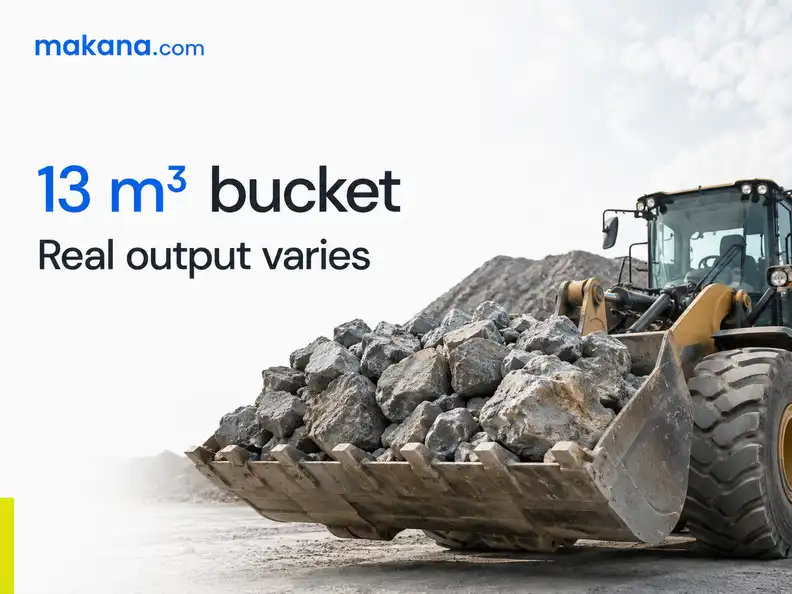
Table of contents
- 1Wheel loader bucket capacity changes with the material
- 2Bucket type matters as much as bucket size
- 3Wheel loader bucket specs that affect truck loading
- 4Wheel loaders for sale on Makana with different bucket setups
- 5Buy wheel loaders on Makana with different bucket setups
- 6FAQs
- 6.1Why does wheel loader bucket capacity change in real work?
- 6.2Is a bigger wheel loader bucket always better?
- 6.3What is the difference between bucket size and real output?
- 6.4What is bucket fill factor in simple terms?
- 6.5Why does large rock reduce bucket fill?
- 6.6Why does wet material affect loader productivity?
- 6.7How much can a 13 m³ wheel loader bucket actually carry?
- 6.8Which bucket type is best for quarry work?
- 6.9Which bucket type is better for loose material?
- 6.10Can I compare wheel loader bucket specs on Makana?
- 6.11Where can I find wheel loaders for sale in Dubai?
A 13 m³ wheel loader bucket is a rated size, not a guaranteed load. What the bucket actually carries on each cycle depends on the material, the bucket type and how well the loader fills it. Wet sand, blasted rock and sticky soil can each change the real output of the same bucket.
Rated capacity is usually quoted as heaped capacity: the volume the bucket holds with the material piled above the edge. On site, a bucket rarely fills to that exact figure. This guide explains why, and what to check when you compare wheel loaders for sale and loading dump trucks.
Wheel loader bucket capacity changes with the material

The same bucket carries a different load depending on what is in front of it. Material type changes how well the bucket fills and how much the load weighs.
| Material type | What usually happens |
|---|---|
| Fine aggregate or sand | Fills the bucket more evenly |
| Large blasted rock | Leaves air gaps between pieces |
| Wet sand or aggregate | Adds weight for the same volume |
| Sticky soil | Can slow filling and unloading |
| Uneven stockpile | Makes clean filling harder |
This is where fill factor comes in. Bucket fill factor is how fully the bucket is loaded compared with its rated capacity. It can be close to or above 100% in loose sand or moist soil, and well below that in poorly blasted rock, where gaps between pieces waste space.
As a rough illustration, a 13 m³ bucket filled to 90% with loose material at about 1.6 t/m³ carries around 19 tons. The same bucket in wet, heavy material carries more weight for the same volume, which is why payload and stability matter as much as size. Treat these numbers as an example only. Always check the loader's rated operating capacity for the bucket fitted.
Bucket type matters as much as bucket size

Bucket shape changes how the loader digs, fills and dumps. The main types are:
- Rock bucket: built for blasted rock and abrasive material, with reinforced edges.
- General purpose bucket: a balanced choice for sand, gravel, road base and mixed work.
- Loose material bucket: a larger, lighter bucket for lighter material and faster cycles.
- Spade nose bucket: a pointed edge that cuts into tough piles and compacted stockpiles.
A rock bucket on a big loader suits quarry faces and truck loading. A loose material bucket suits stockpiles and lighter material. Matching the bucket to the material often matters more than chasing the biggest number.
Wheel loader bucket specs that affect truck loading

Bucket volume is only one part of the picture. These specs decide whether the loader can actually fill a truck quickly and safely:
- Dump height: the loader must clear the truck body.
- Dump reach: how far the bucket reaches over the truck side.
- Breakout force: how well the bucket digs into dense material and fills.
- Tipping load: how much load the loader can carry before it tips, which limits the payload in heavy material.
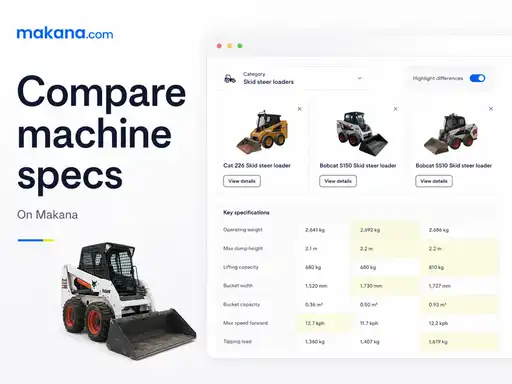
To turn bucket size into truck passes, read how many loader passes it takes to fill a dump truck. To see these specs side by side, use the machinery comparison tool.
Wheel loaders for sale on Makana with different bucket setups
Makana lists used wheel loaders with different bucket setups, from the 13 m³ rock bucket on the Komatsu WA900 down to 3.2 m³ loose material buckets. Rated sizes below are for the setups listed. Stock changes, so check the model pages for the units available now.
| Wheel loader | Bucket setup | Best fit |
|---|---|---|
| Komatsu WA900 | 13 m³ standard rock bucket | High-volume quarry and truck loading |
| Komatsu WA500 | 5.6 m³ heavy-duty excavation bucket | Bulk loading and production cycles |
| Komatsu WA470 | 4.6 m³ loose material bucket with teeth | Stockpiles and loose material |
| Cat 966L | 4.6 m³ general purpose bucket | Construction and aggregate yards |
| Cat 966H | 4.2 m³ general purpose bucket with teeth and top grid | Sand, gravel, road base, bulky material |
| Cat 966H | 3.2 m³ loose material bucket | Lighter material and steady loading |
| Volvo L120F | 3.4 m³ excavation bucket | Yards, stockpiles, truck feeding |
| Cat 980K | 5.4 m³ spade nose bucket | Quarrying, face work, heavy bulk loading |
For a closer look at two of these, read Cat 980K vs Cat 966H bucket size and productivity. For the biggest machine in the table, see why contractors prefer the Komatsu WA900. If you are weighing the Komatsu WA470 against Cat, see CAT 966 vs Komatsu WA470.
Buy wheel loaders on Makana with different bucket setups

Every machine on Makana is inspected, with 75+ inspection points and Jaltest V9 diagnostic checks where applicable. Listings include 3D images, operational videos and large photo galleries, so you can judge the bucket and the machine before you buy. If you are still choosing a size, the wheel loader buying guide for the UAE covers sizing, used machine checks and auctions.
Before you commit, you can:
- Compare bucket specs and loader size with the comparison tool.
- Read the Technical Specifications and expert reviews.
- Estimate a used machine's price with the Used Equipment Value Calculator.
- Send a machine request if you do not see the bucket setup you need.
Own a wheel loader you want to sell? You can sell heavy equipment to Makana through a direct sale, a listing or an auction.
FAQs
Why does wheel loader bucket capacity change in real work?
Different materials fill the bucket differently. Sand fills it evenly, while large rock leaves air gaps and wet material adds weight.
Is a bigger wheel loader bucket always better?
No. A bigger bucket helps only when the loader, the material and the truck setup match.
What is the difference between bucket size and real output?
Bucket size is the rated volume. Real output is what the bucket actually carries per cycle, after fill factor, material density and loader limits.
What is bucket fill factor in simple terms?
It is how fully the bucket is loaded compared with its rated capacity. A fill factor of 100% means the bucket is loaded to its rated volume.
Why does large rock reduce bucket fill?
Gaps between large pieces reduce the usable volume in the bucket, so the load is smaller than the rated size.
Why does wet material affect loader productivity?
Wet material is heavier for the same volume, so payload and stability change. It can also stick, which slows filling and unloading.
How much can a 13 m³ wheel loader bucket actually carry?
It depends on the material and fill. As a rough example, a 13 m³ bucket at 90% fill with loose material at about 1.6 t/m³ carries around 19 tons. Check the loader's rated operating capacity and tipping load for the real limit.
Which bucket type is best for quarry work?
Rock buckets and spade nose buckets are typically suited to tougher quarry work.
Which bucket type is better for loose material?
Loose material buckets suit lighter material and faster cycles.
Can I compare wheel loader bucket specs on Makana?
Yes. Use the machinery comparison tool and the Technical Specifications pages to compare bucket size, breakout force, tipping load and dump height.
Where can I find wheel loaders for sale in Dubai?
Browse inspected wheel loaders on Makana, available from Dubai for local use or export.