Syria rebuilds: The projects in spotlight
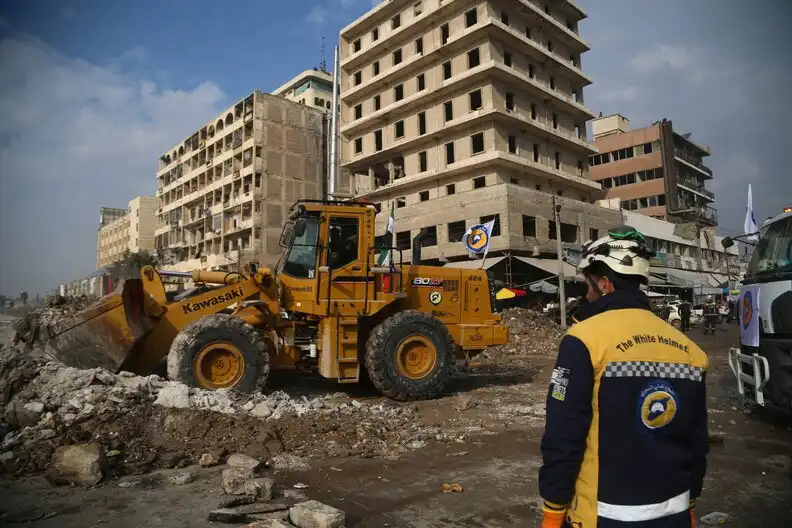
Table of contents
For the first time in over a decade, Syria's economy is breathing again. After years of sanctions and isolation, the shift that began in 2025 has continued into 2026: the United States, European Union, and United Kingdom have lifted or suspended key restrictions on trade, banking, and infrastructure development, with US sanctions fully removed as of July 1, 2025.
Billions in new investments have poured in since, with major deals signed for airport expansions, housing projects, transport corridors, and a national energy masterplan led by US and local consortiums to rebuild Syria's crippled grid and fuel network.
It's the clearest signal yet that Syria's reconstruction has shifted from theory to execution, and the equipment demand behind it is real, immediate, and growing.
Counting the costs: scale of the rebuild

The World Bank now estimates Syria's total reconstruction needs at $216 billion, with possible costs ranging from $140 billion to $345 billion depending on scope and timeline. Earlier UNDP assessments had put physical damage alone at over $118 billion, with total economic losses exceeding $900 billion when lost output and human capital are factored in.
Housing, transport, and power infrastructure together account for nearly 80 percent of the destruction. These are the foundations that must be rebuilt before the economy can restart, and every one of them requires heavy machinery on the ground.
Inside the country, reconstruction priorities are clear:
- Transport and logistics: roads, bridges, and airports.
- Energy and utilities: power plants, pipelines, water systems, solar installations.
- Housing and public services: urban housing, schools, hospitals.
Each of these pillars demands fleets of excavators, loaders, dozers, compactors, and generators, the first responders of national recovery.
Where reconstruction begins

The early contracts show a distinct focus on connectivity and energy:
- Ports: DP World's $800 million expansion of Tartus Port and a new $230 million Latakia terminal upgrade by CMA-CGM are redefining Syria's logistics map. Both projects require dredgers, ship-to-shore cranes, straddle carriers, and heavy earth-moving equipment.
- Energy: US and local consortiums are deploying turbines, generators, and drilling rigs to restore power capacity from roughly 1.6 GW back toward the pre-war 9.5 GW mark. Reuters reported a $7 billion power deal with a Qatar-led consortium as one of the earlier signals of this shift.
- Housing and infrastructure: a UNDP three-year program worth $1.3 billion targets 20,000 housing units and dozens of public facilities, a wave that will pull strong demand for concrete batching plants and tower cranes.
Drilling equipment for Syria's water and energy reconstruction
Two of the most urgent, and most overlooked, categories of equipment demand are water well drilling rigs and oil and gas drilling equipment, and both deserve their own attention beyond the general "drilling rigs" mentioned for the power sector above.
Water infrastructure: years of conflict severely damaged municipal water networks across Syria, and in many areas, wells and boreholes are the fastest practical way to restore water access while pipe networks are rebuilt. This creates real, near-term demand for water well drilling rigs, both truck-mounted and trailer-mounted units, alongside the compressors and mud pumps that support them.
Oil and gas: Syria's energy masterplan depends heavily on restoring domestic oil and gas production alongside grid rebuilding. That means renewed demand for drilling rigs, workover rigs, and associated wellsite equipment as international energy firms resume operations that were dormant for over a decade.
For contractors and suppliers evaluating this segment, the practical challenge is the same one facing every other equipment category in Syria right now: verified supply. A drilling rig with no service history or unclear ownership documentation is a much bigger risk in a market still rebuilding its regulatory and logistics infrastructure than it would be in an established market.
2026 trade shows signal real momentum

Beyond contracts and headlines, the clearest on-the-ground evidence of reconstruction demand is the return of international trade shows to Damascus itself, something that would have been unthinkable just two years ago.
- BUILDEX 2026, the 24th International Exhibition for Construction, ran June 10 to 14, 2026, at the Damascus Fairground, covering heavy, medium, and light machinery alongside building materials and infrastructure technology. Regional dealers with GCC operations, including fleets covering the UAE, Saudi Arabia, and Oman, attended specifically to scout supply chains and potential partnerships.
- Big 5 Construct Syria marked the return of the Big 5 exhibition franchise to Damascus, bringing government stakeholders, contractors, developers, and international suppliers together around housing, infrastructure, energy, and public services demand.
- Syria Specialized Exhibitions (12th edition) drew around 450 companies to Damascus in mid-2026, showcasing industrial machinery, energy equipment, and construction technology aimed squarely at industrial recovery.
For equipment suppliers, this pattern matters: it shows Syrian and regional buyers are actively sourcing machinery right now, not just planning to.
Import incentives worth knowing
Syria has introduced real incentives specifically aimed at getting machinery and industrial equipment into the country faster. These include zero or reduced customs duties on machinery and raw material imports, tax holidays of 5 to 10 years for manufacturing investments, and subsidized land allocation in industrial zones. Combined with the sanctions relief already in place, this makes the current window genuinely more favorable for equipment imports than at any point in over a decade, though buyers should verify current terms directly given how quickly the regulatory environment is still evolving.
Earlier lessons learned
Syria isn't the first country to rebuild from the ground up, and lessons from similar efforts are clear.
In Iraq between 2005 and 2010, major infrastructure projects stalled not because of funding, but because of inconsistent supply chains: spare parts and skilled operators were harder to source than money. Contractors that secured reliable equipment partners delivered twice as fast.
In Beirut's 2020 recovery, time was everything. Local builders relied heavily on modular construction and prefabrication, but those methods only worked because machinery supply was stable and verified.
For Syria, the same rule applies: reconstruction will move at the speed of its equipment supply, not the speed of its funding.
Makana: where does machinery stand?
Operating from the Jebel Ali Free Zone (JAFZA) in Dubai, makana.com is strategically positioned to support this regional surge. From this hub, we connect verified sellers and buyers across the Middle East, North Africa, and the Levant, delivering ready-to-ship machines inspected, certified, and transparently documented.
Our marketplace makes it possible for Syrian contractors, NGOs, and developers to source critical equipment directly from the Gulf, without the friction of intermediaries or unverifiable listings.
Through our 75-point inspections, 360° machine views, and virtual yard tours, Makana ensures every piece of equipment, from 3-ton mini excavators to 40-ton dump trucks, is represented with full data integrity.
Platforms like makana.com aren't just part of the supply chain, they're infrastructure enablers in their own right, bridging the gap between need and availability.
Rebuilding Syria isn't about starting from scratch. It's about doing it better, with ready-to-work heavy machinery, transparent supply, and partnerships that can deliver at scale.
Frequently asked questions
How much will Syria's reconstruction cost?
The World Bank's current estimate is $216 billion, with a possible range of $140 billion to $345 billion depending on scope and timeline. Physical damage alone was earlier assessed at over $118 billion by the UNDP.
What type of heavy equipment is in highest demand in Syria right now?
Excavators, dozers, loaders, and compactors for roads and housing; generators and drilling rigs for the energy sector; and water well drilling equipment for restoring municipal water access, alongside cranes and concrete batching plants for housing and port infrastructure projects.
Are there import incentives for bringing machinery into Syria?
Yes. Current incentives include zero or reduced customs duties on machinery and raw material imports and multi-year tax holidays for manufacturing investments, though terms should be verified directly given how quickly the regulatory landscape is evolving.
Where can Syrian contractors source verified used equipment?
Platforms like makana.com, operating from the Jebel Ali Free Zone in Dubai, connect Syrian contractors and developers directly with verified, inspected equipment from across the Gulf region, avoiding unverifiable listings and unnecessary intermediaries.